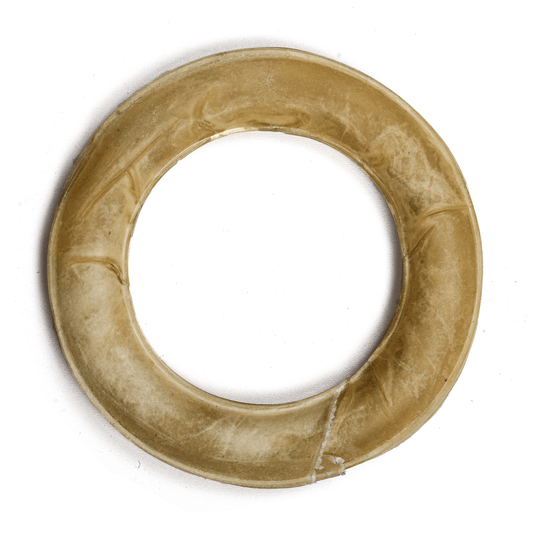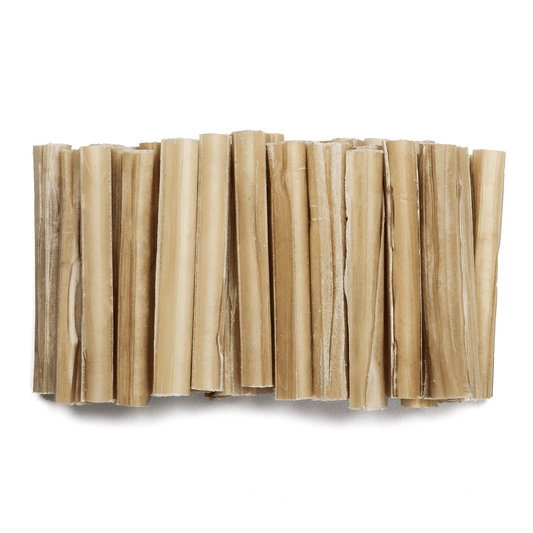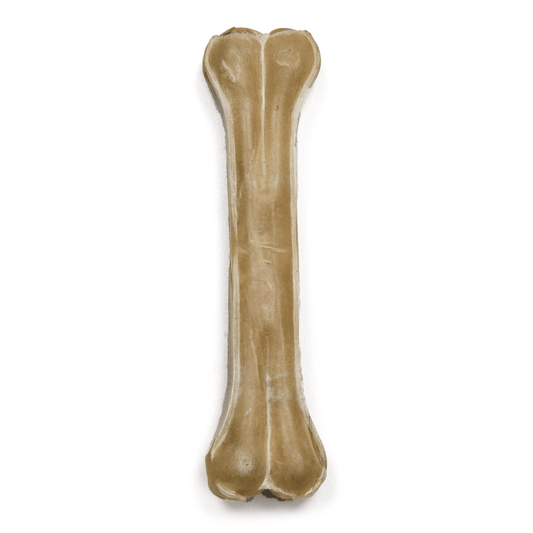

Search rawhide online and you will find people who swear by it and people who swear at it. After years of selling chews to Canadian dog owners, our take is pretty boring: rawhide is safe for most dogs when the hide is decent quality, the bone is the right size, and someone is paying attention. Nearly every rawhide horror story you read traces back to one of those three things going wrong.
Why bother with rawhide at all
Dogs need to chew. It is not a habit, it is wiring. A long-lasting chew like a pressed rawhide bone gives that instinct somewhere to go besides your furniture, keeps an anxious or bored dog occupied for hours, and scrapes plaque off teeth while they work at it. Owners of power chewers in particular tell us rawhide is one of the only things their dog cannot destroy in ten minutes.
Rule one: size up, never down
The bone should be bigger than your dog's mouth. Always. A rough guide from what we sell most:
- Small dogs, 5 to 20 lb: 3 to 6 inch bones
- Medium dogs, 20 to 50 lb: 6 to 8 inch bones
- Large dogs, 50 to 90 lb: 10 inches and up
If your dog is a serious chewer, go oversized and choose pressed rawhide. It is made from tightly compressed layers of hide, so it is denser and lasts far longer than the cheap knotted bones you see at grocery stores.
Rule two: supervise and replace
Stay in the room during chew sessions and keep water available. When the bone gets chewed down small enough to swallow, take it away and toss it. That last little piece is where the choking risk lives, and that goes for any chew, not just rawhide.
Rule three: buy decent hide
This is the part the scary articles skip. Low-grade rawhide from unknown sources, sometimes bleached or coated to look nicer, is where the category earned its reputation. Good rawhide is just hide, pressed in layers, with nothing painted on. Ours is full-grain cattle hide with no coatings, it does not stink up the house, and it holds together instead of splintering into strips.
How often is reasonable
For most dogs, one or two rawhide sessions a week is plenty. Puppies can join in with smaller bones, shorter sessions and closer supervision.
If rawhide still is not for your dog
No problem. Seniors, puppies and gentler chewers usually do better with a softer single-ingredient chew that breaks down more easily than pressed hide. Our natural dog bones cover that end of the scale, and beef trachea, pig ears and pork skin rolls are the customer favourites there.
For a softer everyday reward between chew sessions, our guide to duck treats covers which format suits which dog.
Right size, real hide, a bit of supervision. Do those three things and rawhide goes from scary headline to the quietest afternoon your house has had in months.

Pressed Rawhide Bones
Full-grain cattle hide, pressed in layers, no coatings. Sizes from 3 inch to 10 inch, so there is one that fits your dog properly.
Shop rawhide bones